
 en
en EXTENSION OF THE FACULTY OF MEDICINE – UAB
BARCELONA (Spain)
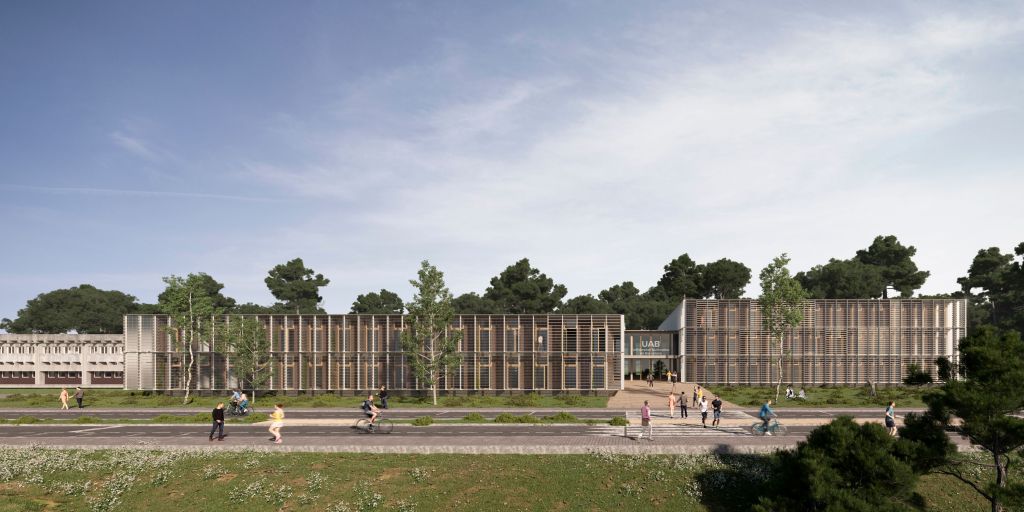
Our proposal for the extension of the Faculty of Medicine at the Universitat Autònoma de Barcelona, which was awarded second prize in the public competition, seeks to integrate the new building within a campus characterized by a sequence of modular buildings and open public spaces.
The existing Faculty of Medicine is organized according to a pavilion-based system. Our proposal continues this typology, allowing for the release of shared spaces between volumes and encouraging both circulation and social interaction among students and faculty.
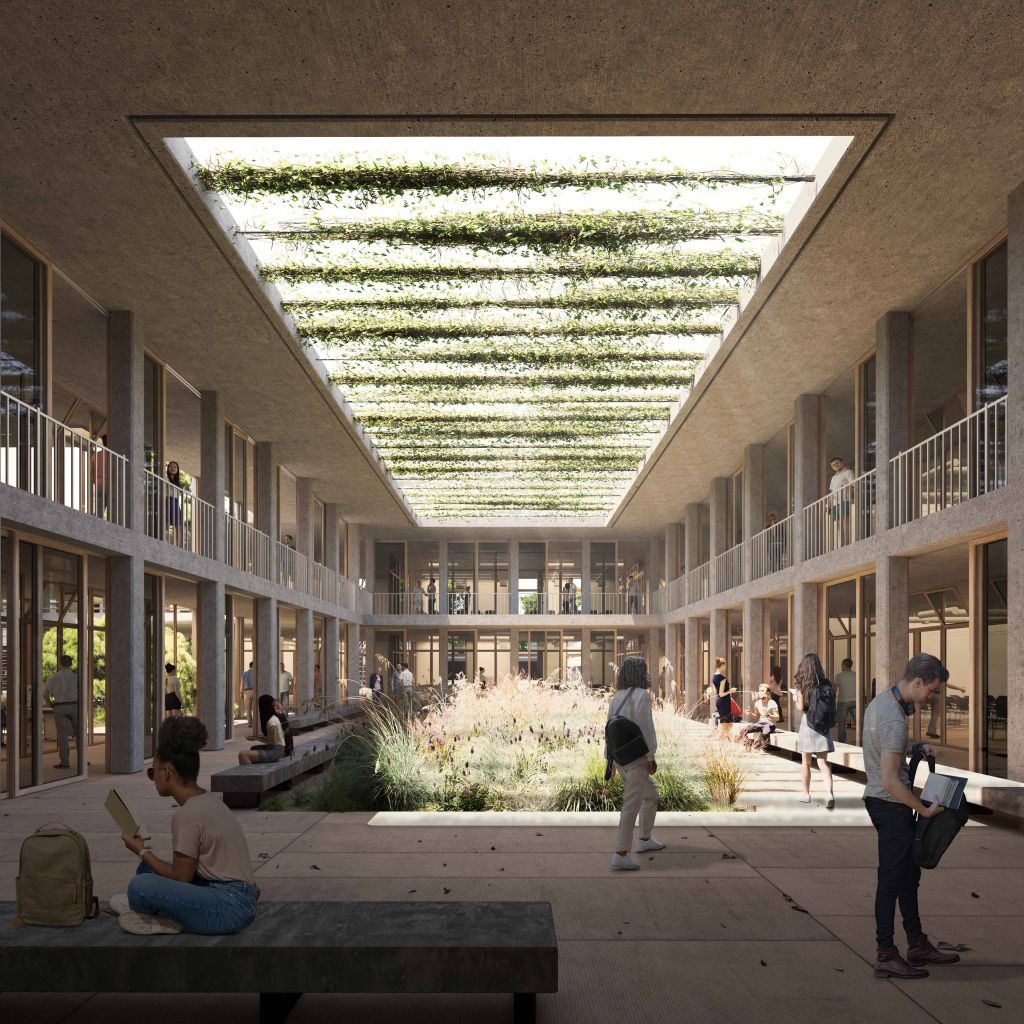
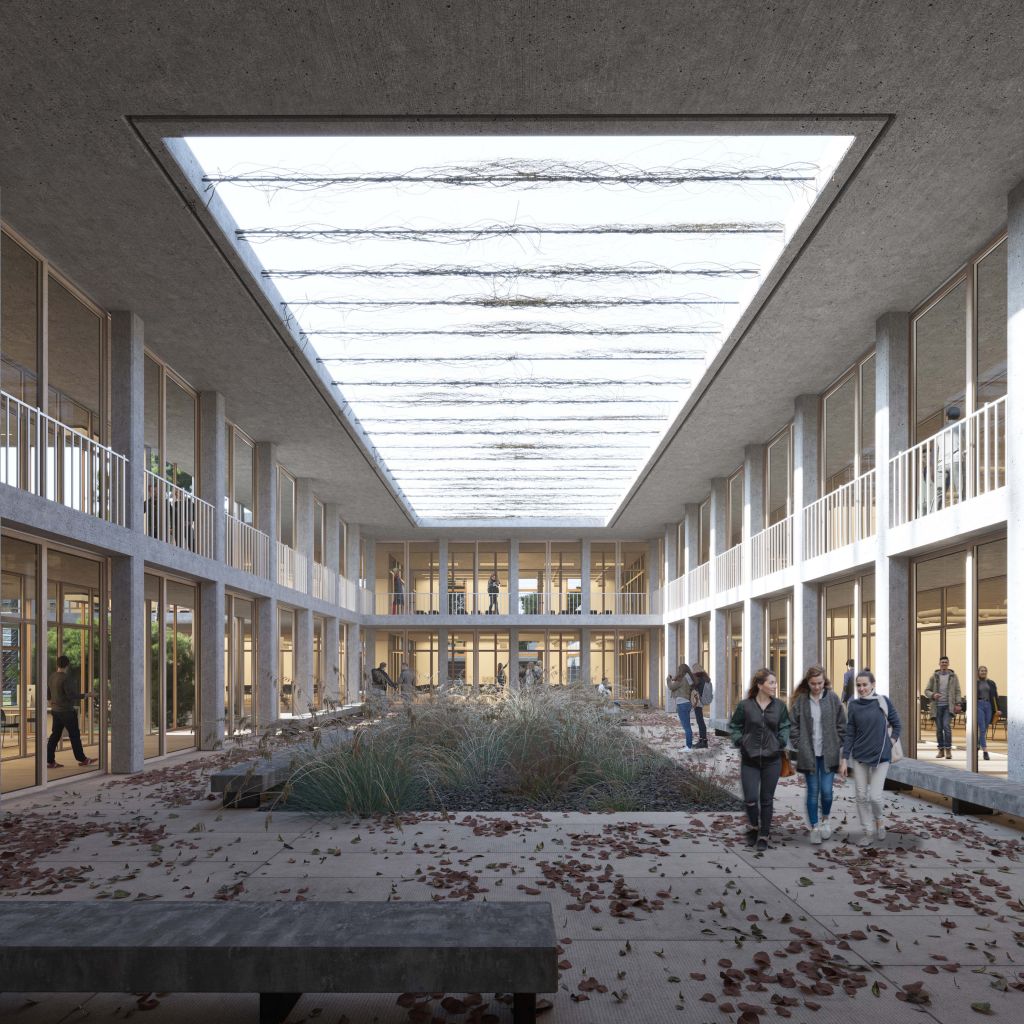
The functional program is therefore organized into three pavilions, each structured around a central courtyard that enhances natural ventilation and daylighting. This is complemented by a smaller courtyard that supports cross-ventilation throughout the complex, as well as a core of vertical circulation and service spaces that enables the independent operation of each pavilion.
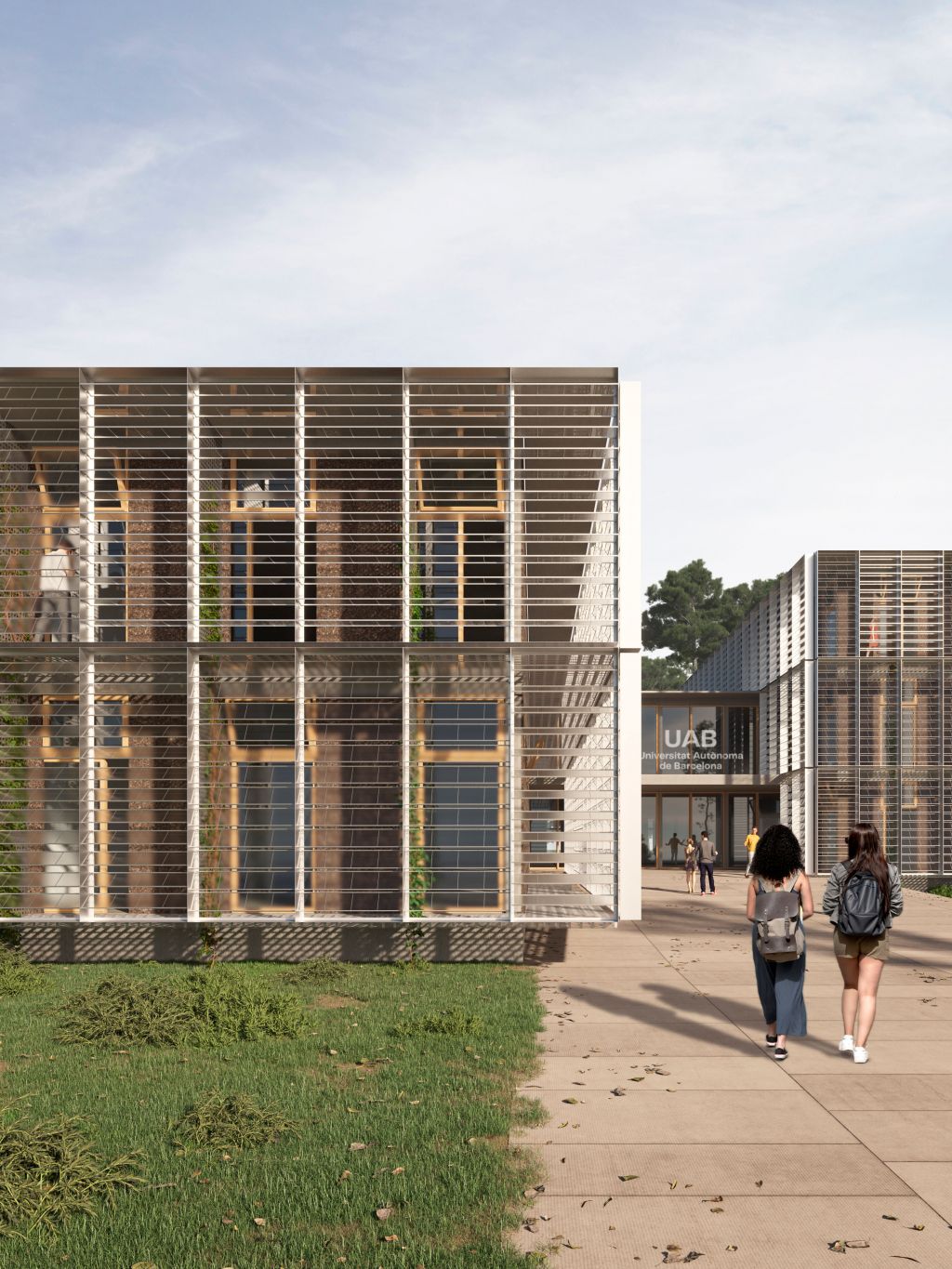
In addition to the passive bioclimatic strategy based on natural ventilation through the courtyards, the design incorporates perimeter galleries along the façades. Thanks to their operable enclosures, these galleries allow interior temperatures to be regulated according to seasonal conditions.
With the aim of ensuring the long-term sustainability of the complex and extending the building’s life cycle, a structural modulation system has been designed to accommodate different interior configurations depending on room sizes and corridor layouts. This strategy provides spatial flexibility, enabling the building to respond not only to current programmatic requirements but also to future needs.
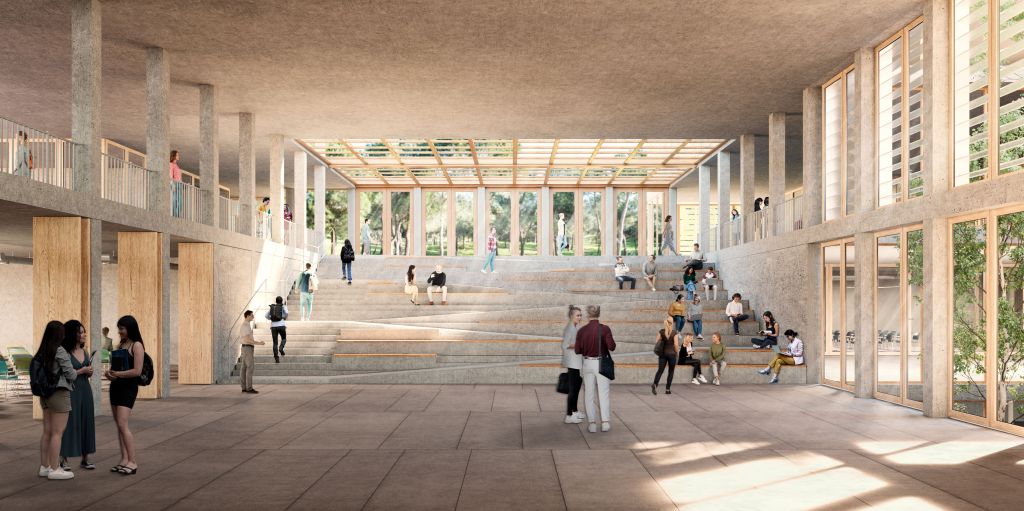
Furthermore, the permeable and transparent façades, together with the low building height, promote the integration of the complex into the surrounding landscape. This relationship is reinforced by the central atrium, a space that connects the main entrance from Can Domènech Avenue with the pine grove at the rear of the site through a stepped seating area that resolves the natural slope of the terrain.
Ultimately, the project responds to the technical, functional, and emotional needs of the program, ensuring efficiency and spatial optimization while enhancing user comfort through a flexible, energy-efficient system that is pleasant to navigate.